
Founded by Silvia Corti and Dafne Plaja, Arthesis Lab transforms artistic practice from producing objects into a shared experience. In this methodology where process, material, and collective rhythm take center stage, the pressure of predefined outcomes completely dissolves.
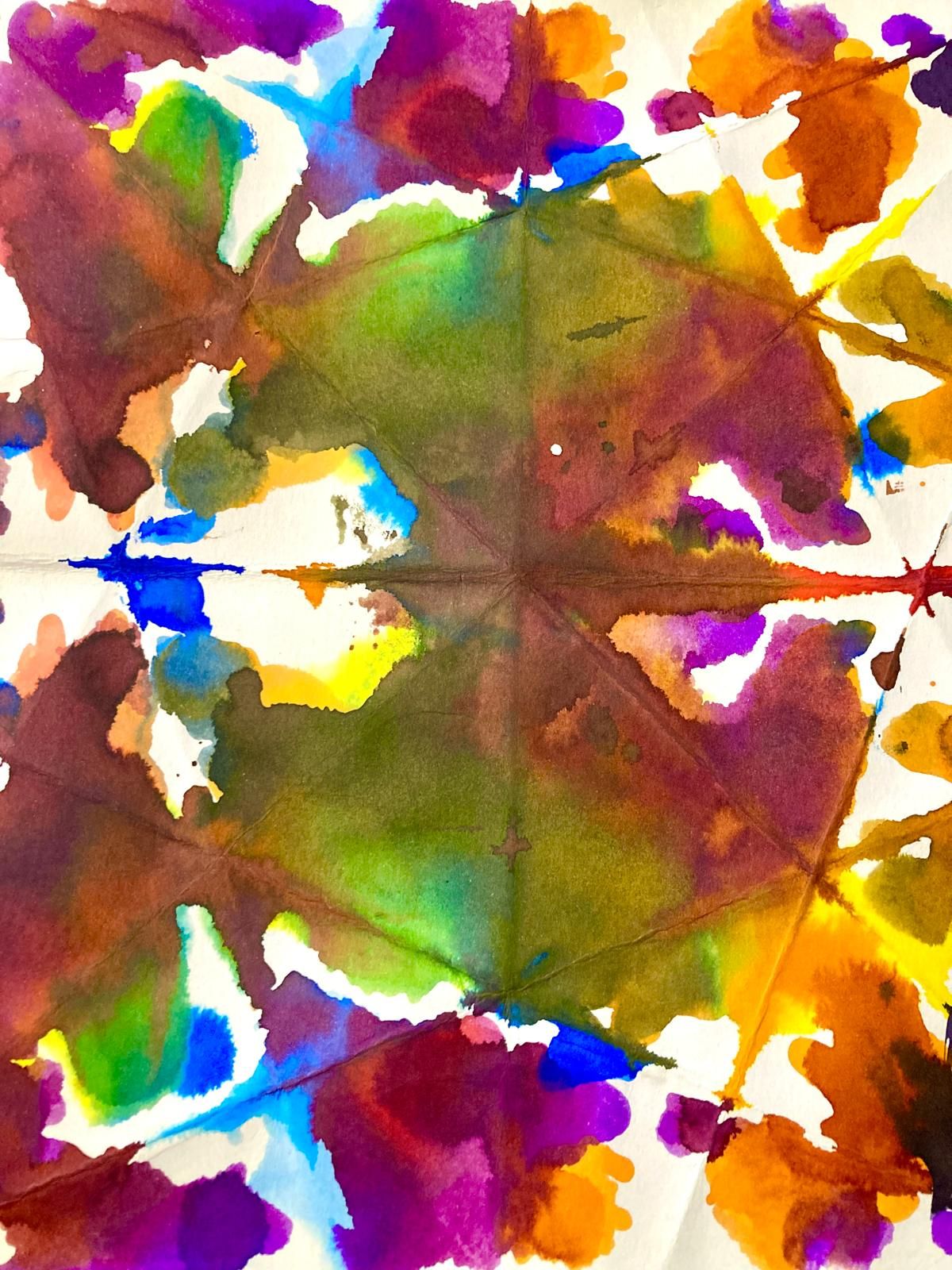
Arthesis Lab seems to operate at the intersection of art and relational practices. How would you describe its core intention?
Arthesis Lab is a space where artistic practice becomes a shared process. We are not interested in producing objects, but in creating conditions where people can enter into relation with gesture, color, and form. The core intention is to open a field where experience can take shape through doing, without the pressure of a predefined outcome. What matters is not what is created, but how it emerges through attention, interaction, and the dynamics that develop within the space. Arthesis Lab was developed by Silvia Corti and Dafne Plaja as a way to explore how artistic thinking can become accessible, relational, and active within different contexts.
Your work emphasizes process over outcome. What does it mean, in practice, to create a space centered on process?
For us, focusing on process means starting from experience, rather than from a predefined goal or outcome. We create situations where people can engage with materials, gestures, and visual elements without needing to define in advance what they are doing or what it should become. The process is not guided by interpretation, but by attention by what appears, shifts, and becomes perceptible while working. In this sense, the space is not structured to produce something, but to allow something to happen. What takes shape is not predefined, but emerges through the encounter between the person, the materials, and the conditions we create.
Your workshops are open also to people with no artistic background. What allows someone to enter the process without feeling blocked?
What often creates a block is not the lack of ability, but the expectation of having to produce something meaningful or “correct”. In Arthesis Lab, we try to remove that pressure by shifting the focus from outcome to experience. Access happens through simple but precise entry points a gesture, a color, a question, or a small action that allows the person to begin without having to define anything in advance. In this sense, we often work with tools such as Le Carte dell’Ascolto, a set of question-based prompts that guide the process through open questions rather than instructions. These devices do not tell people what to do, but create conditions in which they can start and from there, something can gradually take shape.
You have developed structured tools and formats within Arthesis Lab. How do these elements relate to your practice?
The tools we develop are not separate from the practice, but emerge directly from it. Over time, certain structures have taken shape as a way to translate the experience into forms that can be shared and reactivated in different contexts. One example is Praticamente. Manuale pratico di Arteterapia, which gathers a series of structured workshops developed through practice. These are not fixed exercises, but open frameworks that maintain a degree of flexibility and responsiveness to the context in which they are used. What interests us is not creating a method to be applied, but making the process accessible without closing it allowing each situation to remain alive, specific, and relational.
How does Arthesis Lab position itself in relation to artistic and collective practices?
Arthesis Lab does not position itself as a traditional artistic practice, nor as a purely therapeutic context. It operates in a space in between, where artistic thinking becomes a way to activate experience, rather than to produce objects. What interests us is creating conditions where processes can be shared, observed, and transformed collectively. In this sense, we are also interested in developing formats that open the work to multiple perspectives spaces where different practices and approaches can enter into relation, without being reduced to a single framework. Arthesis Lab is not defined by a fixed format, but by its ability to adapt and generate situations where something can emerge through interaction.
What happens within the group dynamic during a session? How do relationships influence the process?
The group is not just a context, but an active part of the process. What happens is not something we can fully anticipate it emerges through the interactions, the rhythms, and the different ways in which each person engages with the materials. There is a continuous exchange between individual and collective dimensions. What one person does can influence the perception and actions of others, creating a field of subtle connections. We do not guide the group toward a shared outcome, but hold a space where these dynamics can unfold without being directed or interpreted. In this sense, the group becomes a living system, where each presence contributes to shaping the experience.
If Arthesis Lab could be described as a way of thinking, what would it be trying to open or transform?
Arthesis Lab is a way of thinking that shifts the focus from interpretation to experience. It does not aim to explain or resolve, but to open a space where something can be perceived, encountered, and allowed to take shape. What it tries to transform is not the person, but the conditions through which experience unfolds creating situations where attention, presence, and relation can become active. In this sense, it is not about reaching a result, but about remaining within a process that is still open, where meaning is not fixed, but continuously emerging.