
Italian artist Silvia Corti discusses her profound artistic practice, exploring the dialogue between expanding forms, color selection, light reflections, and temporal transience.
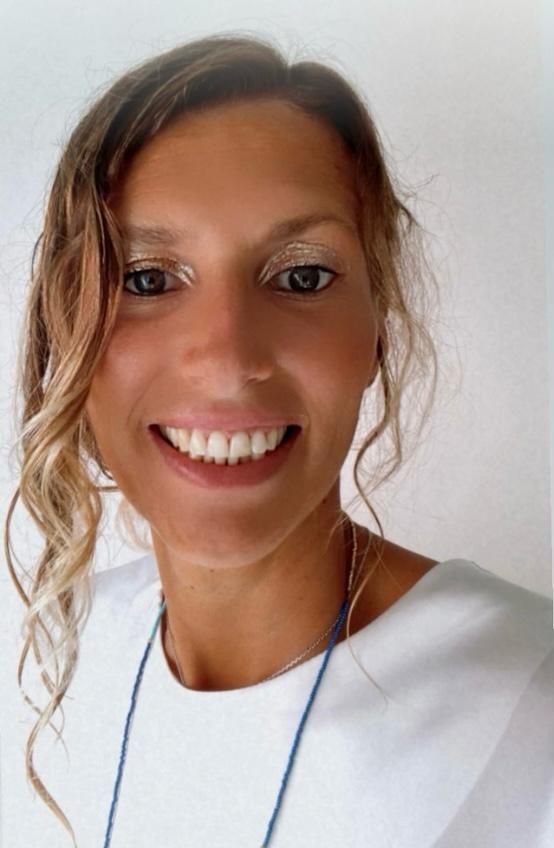
1. Your work seems to move between structure and fluidity. How would you describe the core tension that drives your practice?
My practice is driven by a continuous movement between structure and expansion. I often begin from a defined surface, building a dense field of forms that already inhabit the space. What interests me is how some of these forms can emerge, extend, and enter into relation with others. This emergence is not accidental. It happens through a process of selection, often activated by color choosing what becomes visible, what remains in background, and how different presences interact. I do not think of my works as compositions in a traditional sense. They are more like relational fields where elements coexist, overlap, continually redefine each other. Color matter is some code, but also a tool to make things appear, almost physically, on the surface.
2. In your recent works, I perceive a living surface rather than static imagery. How does a piece manifest in a space where multiple possibilities can coexist?
From the usual starting point, I draw a line across the canvas to inhabit the space before any thinking of a narrative or a certain structure. It remains suspended. Instead of arriving at a fixed image, I dive into relationships that are unstable, even when a piece is finished. My focus is on an unstable balance where forms are never completely fixed but remain open, as part of a process.
3. Alongside painting and sculpture, you also use photography to focus on light reflections. What is the role of architecture in these transitions?
The role of architecture is fundamental because it activates the context. I am particularly interested in glass surfaces. Material as a liquid medium that only captures a brief moment of objects in temporary structures, defining specific interactions. This point resonates deeply with my broader research.
4. Your work exploring the threshold of perception and shifts in surface visibility seems to have evolved over time. What does it mean to introduce unpredictability into your material process?
Over time, I allowed my material to take a role of its own. I drew its potential from the patina, the chemical reactions that produce variations that are unpredictable, always changing. The way I engage with the surface becomes immediate. I avoid developing a linear idea. Instead, I develop configurations that are rearranged, allowing the system to disconnect, reorganize themselves, and plan a new layout in advance. The shape, hierarchies, and gradients are revealed through proximity, in which elements are close to each other. This work becomes a field of interaction. It's a kind of experience that I hope encourages the viewer to interpret and decode the same imagery, adjusting their gaze. It results in a dynamic tension that gives open possibilities to be understood. If a piece can be completed, it already exists.