
In this evocative conversation centering on the "Sacred Decadence" series, the photographer and filmmaker dissects desire, self-censorship, eroticism, and societal conformity. Defining the body as our most honest self-portrait, her vision—shaped across London, Paris, and New York—extends into her cinematic works, offering a dark yet liberating invitation to awareness.
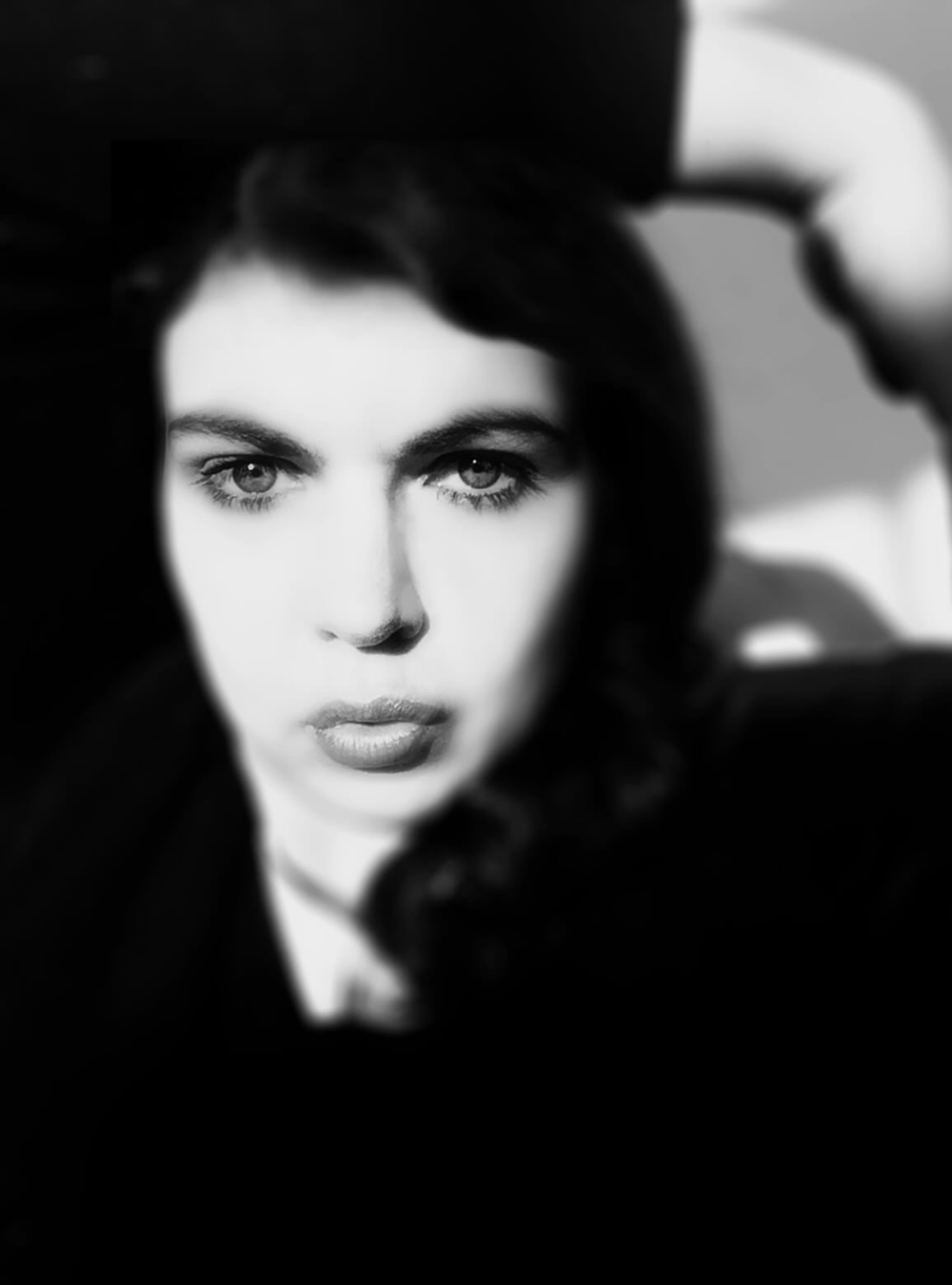
1. In Sacred Decadence, you present decadence not as an escape, but as a form of resistance. What inspired this idea?
My biography is my inspiration. I learned resistance long before I learned art. Sacred Decadence emerged from that instinct the refusal to accept the world exactly as it is presented to us. In Sacred Decadence, decadence is not an escape from reality it is an act of defiance against it.
Desire, passion, and individuality are controversial because they threaten control.
Freedom awakens a longing to rebel, a willingness to embrace sudden disorder.
Society fears disorder especially when it emerges in women. What would happen if we abandoned the absurd roles we perform every day? I can assure you: the world as we know it would no longer be enough.
3. You write, “Decadence is not a crime; it’s a declaration.” What exactly is this declaration challenging?
It challenges every system that asks us to betray ourselves in exchange for acceptance. Decadence is not a celebration of excess; it is a refusal to live a diminished life.
4. In your photographs, the body appears as both a physical and symbolic space. What does the body represent for you as an artist?
The body is universal. We all inhabit different lives, but the same fragile condition. Desire, beauty, suffering, and mortality all pass through the body. It is our most honest self-portrait, the first and last truth we possess.
5. Sacred Decadence suggests a strong connection between spirituality and eroticism. How do you interpret the relationship between these two forces?
Spirit and Eros create ecstasy. Both seek to dissolve the boundaries of the self and reach something greater. For me, spirituality and eroticism are not opposing forces they are different paths to transcendence.
6. Provocation plays an important role in your artistic practice. How do you balance provocation with deeper meaning?
Provocation without meaning is merely noise. I use provocation as an invitation, not a destination. Its purpose is to open a door to deeper questions.
7. Through the phrase “polite bodies in woollen jumpers,” you seem to critique contemporary society. What aspects of modern culture are you responding to?
I am responding to a culture of self-censorship. The fear of disapproval has become so powerful that many people abandon their individuality before anyone asks them to.
“Polite bodies in woollen jumpers” describes a kind of spiritual timidity. Society that has mistaken safety for life. A nervous system so fragile that even the smallest act of rebellion feels dangerous.
8. Your images often merge the aesthetics of classical art with a contemporary sense of freedom and self-expression. How did this visual language develop?
My visual language emerged from a dialogue between European auteur cinema, photography, existential literature, and philosophy. I am drawn to works that ask fundamental questions about freedom, desire, mortality, and meaning. The classical aesthetic came naturally; the pursuit of freedom made it contemporary.
9. Having worked extensively in London, Paris, and New York, how have these cities shaped your artistic vision?
Those cities shaped me profoundly. Paris opened me to the world, New York strengthened me, and London gave me love. Each city taught me something different about art, ambition, freedom, and human nature. Together, they helped me become the artist I am today.
10. As a female photographer working internationally, how have your experiences influenced the way you approach your work?
Working internationally has taught me to trust my own perspective. As a woman, I was often expected to adapt, compromise, or seek permission. Art taught me the opposite. It taught me to observe carefully, think independently, and remain faithful to my vision.
11. The figures in Sacred Decadence appear liberated from social expectations. Do these characters represent real individuals, symbolic ideas, or both?
The figures in Sacred Decadence are real people. The collection emerged from commissions I created for cultural figures across Europe and New York. The symbolism comes later. Every human being is already a myth in progress.
12. Do you believe the role of art is to disturb, to provoke thought, or to liberate people?
All of the above. Art should disturb, provoke thought, and liberate. But above all, it should make us feel more alive.
13. As both a photographer and filmmaker, how do these two mediums inform and enrich one another in your creative process?
Photography captures the myth. Cinema reveals the journey behind it. One freezes a moment of transformation; the other follows it through time.
14. Social media and digital culture seem to encourage individuality while simultaneously promoting conformity. How do you view this contradiction?
Social media is our most honest illusion. It sells individuality and rewards conformity. It amplifies beauty, loneliness, vanity, desire, and connection all at once.
What excites me is the power of the image. A single photograph can make strangers fall in love or declare war. Nothing reveals human nature more quickly than a screen.
15. Your current film projects, Sick Bacchus and The First Hour After Violent Death, explore intense and complex themes. Do they continue the ideas found in Sacred Decadence, or do they represent a new direction in your work?
They are not a departure from Sacred Decadence but a deeper descent into its concerns. Sick Bacchus and The First Hour After Violent Death are decadent, nihilistic, and critical of consumer culture. They explore what remains when pleasure, distraction, and illusion have exhausted themselves.
What interests me is the possibility of awakening. Not through comfort, but through confrontation with death, emptiness, and the limits of the self. Sometimes we must lose faith in the world before we can discover something greater than it.
For me, darkness is not the end of the journey. It is the beginning of awareness.