
We explored the traces of lines, memory, and the fragility of materials with Lisbon-based visual artist and teacher Sofia Coelho. Emphasizing that art is not an escape but a way of staying, Coelho shares how she translates her internal rhythm onto paper.
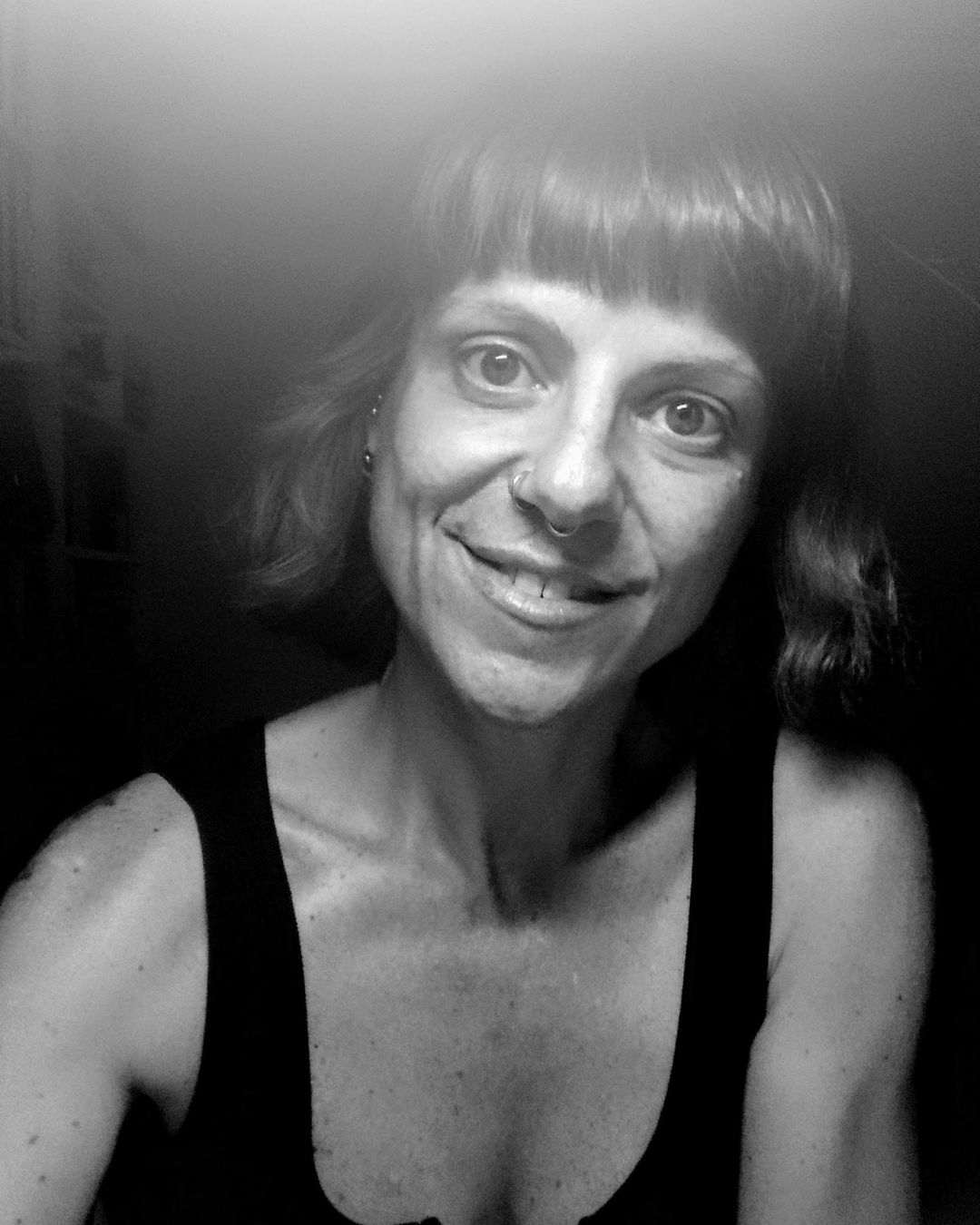
Could you tell us a little bit about yourself?
I’m a visual artist and teacher from Lisbon, and my work lives somewhere between drawing, sensation and memory. I’m interested in the invisible, in what happens before a gesture appears on paper, or just after it fades. Teaching allow me to expand the way I look at creation: it made me understand that we all see differently, and that difference is where beauty begins.
Is art an escape for you, or more of a form of expression?
Art is not an escape; it’s a way of staying. It’s how I anchor myself. It’s where I understand what I’m feeling before I can name it. Expression, for me, isn’t about showing, it’s about revealing just enough to let others enter the work with their own story.
Have you ever felt that a piece of your work was never truly finished? What makes a work feel “complete”?
Yes, constantly. My drawings often feel like they’re still breathing, still shifting. A work is complete when it stops asking questions and starts holding its own silence. When I feel I can step back... and it no longer needs me.
Was there someone in your past who inspired you maybe a friend, teacher, or family member?
I had teachers who taught me to look slowly, to notice hesitation, tension, softness, absence. And in my family, creativity wasn’t dramatic; it was simply allowed. That quiet permission shaped me more than I realised at the time.
Do you prefer to be alone when creating your art?
Usually, yes. Solitude gives me access to a certain inner temperature, a frequency I can’t reach otherwise. But I also love the energy of people working silently around me. Not talking. Just... existing. That presence can be profoundly inspiring.
Has there ever been a period in your life that gave you a new artistic perspective a relationship, a journey?
Absolutely. There were shifts, emotional ones, ruptures, encounters, moments of intensity, that changed the way I draw, the way I choose a line or erase it. Certain relationships, especially, sharpened my attention to nuance, to vulnerability. They opened doors in my work that I didn’t know were closed.
Has there been a film or book that recently inspired you? Did it influence your art in any way?
Lately I’ve been drawn to works where the emotional undercurrent is stronger than the narrative, stories that move in silence. These influences don’t appear directly in my drawings, but they alter my internal rhythm. And when my rhythm changes, the work follows.
What is the strangest thing you’ve learned about painting or drawing?
That the work often knows more than I do. It resists, contradicts, surprises me. Sometimes I think I’m in control... and then a single line ruins everything and saves everything at the same time.
Have you ever had an “Aha!” moment in your artistic journey?
Yes, the day I realised I didn’t need to hide fragility. That my hesitations, my emotions, my intensity... were not flaws in the work, but material for it. That changed everything.
Do the colors, shapes, or techniques you use reflect emotions or impressions from your personal life?
Always. Even when I try to be objective. My lines tend to behave like my emotions: sometimes controlled, sometimes impulsive, sometimes barely there. The work becomes a map of what I’m carrying at that moment.
Do you love the process more than the result? How personal is that feeling of “losing yourself”?
The process is where I feel most alive. There’s a moment when everything else dissolves, time, noise, expectations. That moment is entirely personal... almost private. It’s where the real work happens.
When creating, do you feel guided by an inner voice?
Not a voice, more a vibration. A pull. A sense of “yes, here” or “no, not this”. It’s subtle, but I’ve learned to trust it.
What do you think people usually feel when they look at your art?
People often tell me they feel a kind of quiet intensity, something slightly suspended, intimate, almost tactile. Many say it reminds them of an emotion they can’t fully explain. I like that. I want the work to open a door, not close a meaning.
Your top 3 favourite songs?
Your top 3 favourite books?
Your top 3 favourite foods?
Your top 3 favourite activities?
Your top 3 favourite cities?
Do you think there’s money in art?
There is, but not in the myth. There’s money where there’s persistence, coherence, community, and context. Art is both intimate and professional. The secret is to navigate both without losing your truth.
What advice would you give to someone just starting out in art?
Be patient with yourself. Pay attention to what moves you, not what impresses others. Experiment, destroy, begin again. Most of all: protect your curiosity. It’s your most valuable tool.