
Blending childhood painting roots with the dynamism of street culture and the structural rhythm of typography, the artist treats letters not merely as legible tools, but as visual forms to be experienced. A process-oriented investigation of visual language unfolding at the intersection of traditional and digital mediums, public spaces, and gallery walls.
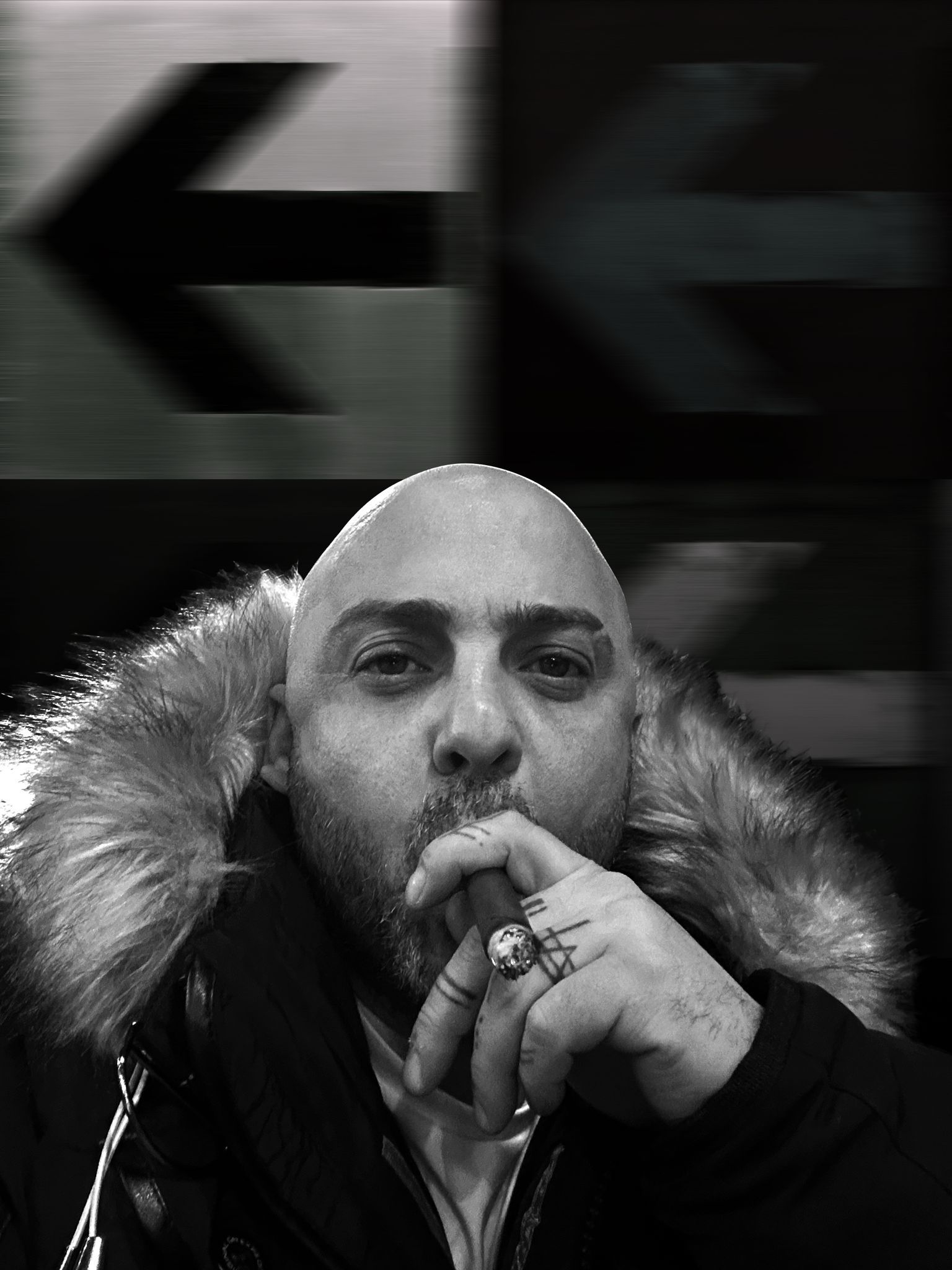
1. Your artistic journey began with painting in childhood, but today you have a typography-centered production practice. How did this transformation come about?
This transformation was actually a process that developed naturally over time rather than a sudden rupture. In my childhood, painting was the most direct way of expressing myself; I was trying to understand the world through colors, shapes, and composition. However, in later years, I realized that visual language does not consist only of images, and that letters and words are also powerful visual elements.
My interest in typography stemmed from the dual structure of text, which possesses both a semantic meaning and a visual form. The shape of a letter, its rhythm, and its relationship with space began to fascinate me more and more. Over time, I saw that elements such as composition, balance, and layered narrative in painting were carried over to my typographic works. Therefore, although the direction of my practice has changed, my relationship with painting has not completely disappeared; on the contrary, when working with typography today, I still think from a painterly perspective.
Today, I treat typography in my productions not merely as a communication tool, but as a field of expression and research in its own right. This transformation became a natural result of my desire to explore the boundaries of visual narration.
2. How did your encounter with graffiti change your understanding of art?
My introduction to graffiti was a turning point that radically changed my view of art. While art was previously a more individual and enclosed area of production for me, thanks to graffiti, I discovered that public space could also be a canvas. Producing on the street taught me what it means to establish a direct and unmediated relationship with the audience.
Graffiti also deepened my interest in letterforms. The writings, which I initially saw as a tool of expression and identity, turned into a formal and aesthetic field of research over time. I began to think about the rhythm, structure, and spatial relationship of letters. This process formed the foundation of my current production practice, at the center of which lies typography.
In addition, graffiti gave me the courage to produce spontaneously, take risks, and experiment. The dynamism and free approach of street culture still maintain their influence on my work. For this reason, graffiti is not just a starting point for me, but an important school that shapes my understanding of art.
3. You see typography not just as a design element, but as a language of expression. What do letters and words convey to you?
For me, letters and words are not only tools that carry information, but also powerful visual and emotional elements. The shape, weight, rhythm of a letter, or its relationship with negative space can be just as effective as the meaning it carries. Therefore, I see typography not merely as something to be read, but as a form of expression to be felt and experienced.
While words carry specific meanings, letters form the visual character of these meanings. Sometimes the form of a letter can evoke different associations in the viewer, independent of the content of the word. This dual structure turns typography into an extremely rich area of research for me.
4. How do you define the boundaries between typography and painting in your work?
Frankly, I do not think there is a definitive boundary between typography and painting in my works. For me, these two fields are not separate disciplines but forms of expression that are in constant interaction. At some point, letters can turn into an image, while an image can acquire a typographic character.
My understanding of composition, color, texture, and layering coming from painting directly affects my typographic productions. Likewise, the rhythm, structure, and visual language of typography play an important role in the setup of my paintings. Therefore, in my works, letters sometimes cease to be a readable text and turn into a painterly element; sometimes visual elements begin to behave like a piece of writing.
5. How do you follow a workflow when bringing digital and traditional techniques together?
My working process usually progresses in a continuous transition between digital and traditional methods. At the ideation stage, I usually start with sketches; drawings and notes on paper allow the thought to develop more freely and spontaneously. Then, I transfer these initial drafts to the digital environment and work in more detail on composition, typographic structure, scale, and layers.
While digital tools offer me the opportunity to experiment, transform, and quickly test different possibilities, traditional techniques strengthen the physical and tactile aspect of the work. For this reason, I often reopen a design I developed digitally to physical interventions; I add new layers with paint, drawing, collage, or different materials.
What matters to me is not that the technique used comes to the fore, but that the idea can find the language it needs. I see digital and traditional methods not as rivals, but as tools that feed each other. The combination of these two approaches creates a production process in my work that is both controlled and open to surprises.
6. When producing typography-based art, is readability or visual impact more important to you?
It is difficult to give a single answer to this question, because for me, readability and visual impact are not mutually exclusive concepts. The purpose and context of the work determine which one will stand out more.
If my primary goal is to convey a specific message directly, readability becomes an important element. However, in my artistic productions, I often treat letters not just as an information carrier, but as a visual material. At this point, the visual impact and the atmosphere created by the letters can sometimes take precedence over readability.
It interests me that the viewer approaches a work first on a visual level, and then establishes a relationship with meaning by exploring the layers. Therefore, while the text is instantly readable in some of my works, in others, the letters become abstract, turning almost into visual forms. This situation invites the viewer to a more active process of reading and interpretation.
7. How does your street art background reflect on the works you produce in galleries and exhibition spaces today?
My street art background is one of the most important experiences at the core of the works I produce today. Producing on the street taught me to establish a direct relationship with space, to read the environment, and to develop an unmediated communication with the audience. This approach came along with me when I moved my works to galleries and exhibition spaces.
I see exhibition spaces not merely as neutral areas where works are displayed, but as a part of the work itself. Just like on the street, the architecture, scale of the space, and the movement of the viewer affect my production process. For this reason, I usually try to construct my works in a way that establishes a relationship with the space they are in.
8. How do you establish a relationship between your mural works and your works on canvas?
I do not see my mural works and my works on canvas as completely separate fields of production. On the contrary, both are reflections of the same visual language and intellectual research on different scales. Fundamentally, my interest in the relationship between letter, form, composition, and space continues in both forms of production.
In mural works, the architectural structure and public space become an integral part of the work. As the scale grows, the relationship established with the viewer also changes; the work can offer different experiences when perceived from a distance and different when examined closely. This situation directly affects my composition and typographic decisions.
In my works on canvas, I find a more intense, detailed, and introspective area of research. With the freedom provided by working on a smaller scale, I can make more precise interventions on the surface, texture, and layers. Sometimes ideas I develop in mural projects are carried over to canvas, and sometimes experimental approaches that emerge in the studio guide my works in the public space.
9. How does working as an art director in the advertising industry affect your independent art practice?
Working as an art director in the advertising industry has gained me significant experience in visual communication, idea development, and project management. Working with different disciplines, developing an idea in a short time, and turning it into an effective visual language are skills that feed my independent art practice in various ways.
Particularly, my experience in typography, composition, and visual hierarchy allows me to make more conscious decisions in my art productions. While the fast and solution-oriented structure of the advertising world gains me discipline in planning and implementing projects, it also develops my ability to think across different media.
However, my independent art practice offers a field distinct from the structure of advertising, which is bound to specific targets and communication needs. In art production, I find the opportunity to develop a more experimental, personal, and research-based approach. Therefore, although I try to keep the two fields separate, I can say that there is a constant interaction between them.
While on one hand advertising provides me with a strong visual communication infrastructure, on the other hand, my art practice keeps my creative way of thinking alive and brings different perspectives to my professional production. This mutual interaction creates a balance that enriches my work in both fields.
10. Do you think typography-based contemporary art is sufficiently visible in Turkey?
I think typography-based contemporary art has attracted more interest in Turkey in recent years; however, it is still difficult to say that it has fully reached the visibility it deserves. Typography is generally evaluated as a part of graphic design and is not sufficiently discussed as an independent field of artistic expression. This situation can cause typography-oriented productions to be visible in a more limited area in the art world.
Nevertheless, the increasingly permeable boundaries between different disciplines is an important development. Today, artists, designers, and street art-origin producers treat typography not only as a functional tool but also as a conceptual and visual form of expression. The widespread adoption of this approach is one of the important factors increasing the visibility of the field.
Considering Turkey's strong writing culture, calligraphy tradition, and visual narrative accumulation, I believe there is a very rich potential for typography-based contemporary art. With more exhibitions, publications, research, and interdisciplinary collaborations, I think this field will reach a much more visible and effective position in the coming years.
From my point of view, typography is beyond being a field positioned between design and art; it is a powerful form of expression that brings cultural memory, language, and visual thought together. Therefore, discussing and gaining more visibility for productions in this field will also make an important contribution to the contemporary art environment.
11. You have shared your thoughts on street art and typography in your writings and workshops. Why is education and knowledge transfer important to you?
For me, education and knowledge transfer do not mean just sharing experiences, but also creating mutual learning and thinking spaces. I believe that the experiences I have gained, the questions I have encountered, and the production methods I have developed so far can be useful for others as well. For this reason, I see sharing knowledge through writings, talks, and workshops as a natural extension of my production practice.
Fields like street art and typography are often evaluated as disciplines learned through practice. However, I think it is important to discuss the historical, cultural, and conceptual dimensions of these fields as well. As a matter of fact, I completed my master's thesis under the title "Painterly Interpretations of Typographic Images" on this very subject.
This study focused on how typography can be evaluated not only as a communication tool but also as a painterly and conceptual form of expression. The academic research process also formed the theoretical basis of many thoughts I deal with today in my productions and educational activities.
In workshops and educational activities, I aim to bring participants together not only with technical knowledge but also with critical thinking, visual literacy, and research processes. Because I believe that creative production is strengthened not only by practice but also by intellectual infrastructure.
Knowledge sharing is not a one-way process for me. Every workshop and every encounter allows me to meet different perspectives and re-evaluate my own practice. This interaction contributes to my continuous development both as an educator and a learner.
In addition, I believe that access to knowledge and experience sharing in creative fields encourages the emergence of new productions. If my own experiences can inspire someone else's production process or help them ask new questions, I find this extremely valuable. For this reason, I see education and knowledge transfer as an activity as important and transformative as art production.
12. You have taken part in many group exhibitions, including three solo exhibitions. What has been the biggest change in your understanding of art during this process?
Throughout my exhibition experiences, the biggest change I experienced in my understanding of art was learning to approach production process-oriented rather than result-oriented. In the early periods of my career, I used to focus more on visual results and technical competence, but over time I realized that art practice is actually a continuous process of research, questioning, and transformation.
The experience of three solo exhibitions and many group exhibitions offered the opportunity to evaluate my works in different contexts and observe the relationship they establish with the viewer. In this process, I understood better that a work gains meaning not only within itself, but also together with the space it is exhibited in, the conceptual framework it takes part in, and the interpretations of the viewer.
Especially in my productions researching the relationship between typography, painting, and street art, I discovered that asking questions and opening new possibilities is more valuable than giving definitive answers. My master's study, "Painterly Interpretations of Typographic Images," also became an important turning point deepening this approach. Thanks to this research, I found the opportunity to treat typography not only as a design-oriented element but as an independent area of artistic expression and thought.
At the point I have reached today, I see art not as a target where a certain style must be achieved, but as a continuously developing and transforming research practice. Therefore, what changed over the years was not only the techniques or forms of production I used; my perspective on what art is and what it can do also shifted. Every exhibition represents a new stage of this transformation and offers me an opportunity to learn anew.
13. Are there frequently recurring themes or stories in your productions?
For me, art means keeping the sense of curiosity alive and chasing different possibilities rather than repeating a certain style. To date, in addition to my typography-centered works, I have also realized productions in different fields such as sculpture, ceramics, and painting. Transitioning between these disciplines allows me to handle thought not only on two-dimensional surfaces but also through volume, texture, and space. Especially in ceramic and sculpture works, the relationship established with the physical presence of the material adds a different depth to the production process.
14. How do you evaluate the role of typography in art in an era where digital communication is changing rapidly today?
I think the role of typography has become even more important in today's world where digital communication is transforming rapidly. Every day, we are exposed to a very intense visual and textual flow through screens. This situation removes typography from being merely a tool that transmits information and transforms it into a cultural, aesthetic, and conceptual area of expression.
Today, typography appears almost everywhere in life, from digital platforms to public spaces. This visibility also creates a rich area of research for artists. Because typography offers powerful possibilities for questioning the relationships between language, technology, identity, and visual culture.
For this reason, I believe that typography will continue to be one of the important expression tools of art in the future as well. As digitalization increases, the boundaries of writing and visual language expand even further; this offers artists new forms of expression and experimental production areas.
15. In your art practice, which you define as an exploration area that pushes boundaries, what are the new directions you want to explore in the coming years?
In the coming years, I want to investigate more deeply especially the areas where physical and digital forms of production intersect. The new possibilities offered by technology, the transformation of visual language, and the changing structure of the relationship established with the viewer are highly exciting topics for me. Besides, I aim to expand the scale and experience dimension of my productions by working with different materials, surfaces, and spaces.
In addition, interdisciplinary collaborations are among the areas that interest me. I believe that producing together with people coming from different creative fields feeds my own practice with new perspectives. I think such encounters are important in terms of stepping out of accustomed methods and producing new questions.
In general, my goal is to develop a sustainable production practice. For me, production is not a process dependent only on moments of inspiration; it is a long-term journey that I maintain with self-discipline, keeping my excitement, and respecting the work I do. I take care to approach every new work with the same curiosity and the same concentration. I believe that this approach is one of the most important elements deepening my production over time.