
Moving between Italy and the United States, Francesco Topino blends digital negatives with alternative printing techniques, transforming photography into a space of internal confrontation. We discuss the fluidity of memory and human vulnerability through his series "Blurred" and "Decadentia."
1. Your first encounter with photography came through your mother, who was also passionate about the medium. How has her influence shaped the artist you are today?
Photography has always been about visual and emotional legacy for me. My mother was a passionate enthusiast, and I grew up surrounded by the smell of film and her early shots, along with her albums. Rather than just focusing on technique, she taught me to be curious her way of seeing the world and pausing to notice details that others overlooked. Embracing photography felt like a natural extension of that dialogue with her and with the world around me.
2. You describe photography as a way to understand your fears, hopes, and inner self. How has this relationship with photography evolved over the years?
For me, photography has transformed from just a way to capture the outside world into a meaningful reflection of my inner self. It serves as a visual journal, where every decision, what to focus on, leave out, or emphasize reveals my psychological experiences, making the process truly therapeutic.
Over time, this relationship evolves through several distinct stages:
In the beginning, the emphasis is often on technical settings or photographing visually striking subjects. As the years go by, the focus shifts inward. Images that may not be technically perfect start to resonate more because they capture genuine emotions or specific mental states.
Photography serves as a mirror, prompting you to face what your mind might avoid or cling to. By pointing the camera at yourself or observing how you capture the world, you externalize your internal struggles. This process allows you to confront, unpack, and find peace with your personal emotions.
At first, you might take photos to control how others perceive you. As your relationship with photography matures, you begin to use the camera to define your own identity, moving away from the need for external validation or societal expectations. The camera transforms into a tool for building confidence while helping you focus on hope and gratitude.
3. Blurred is described as the result of a self-healing process. What personal experiences inspired the creation of this series?
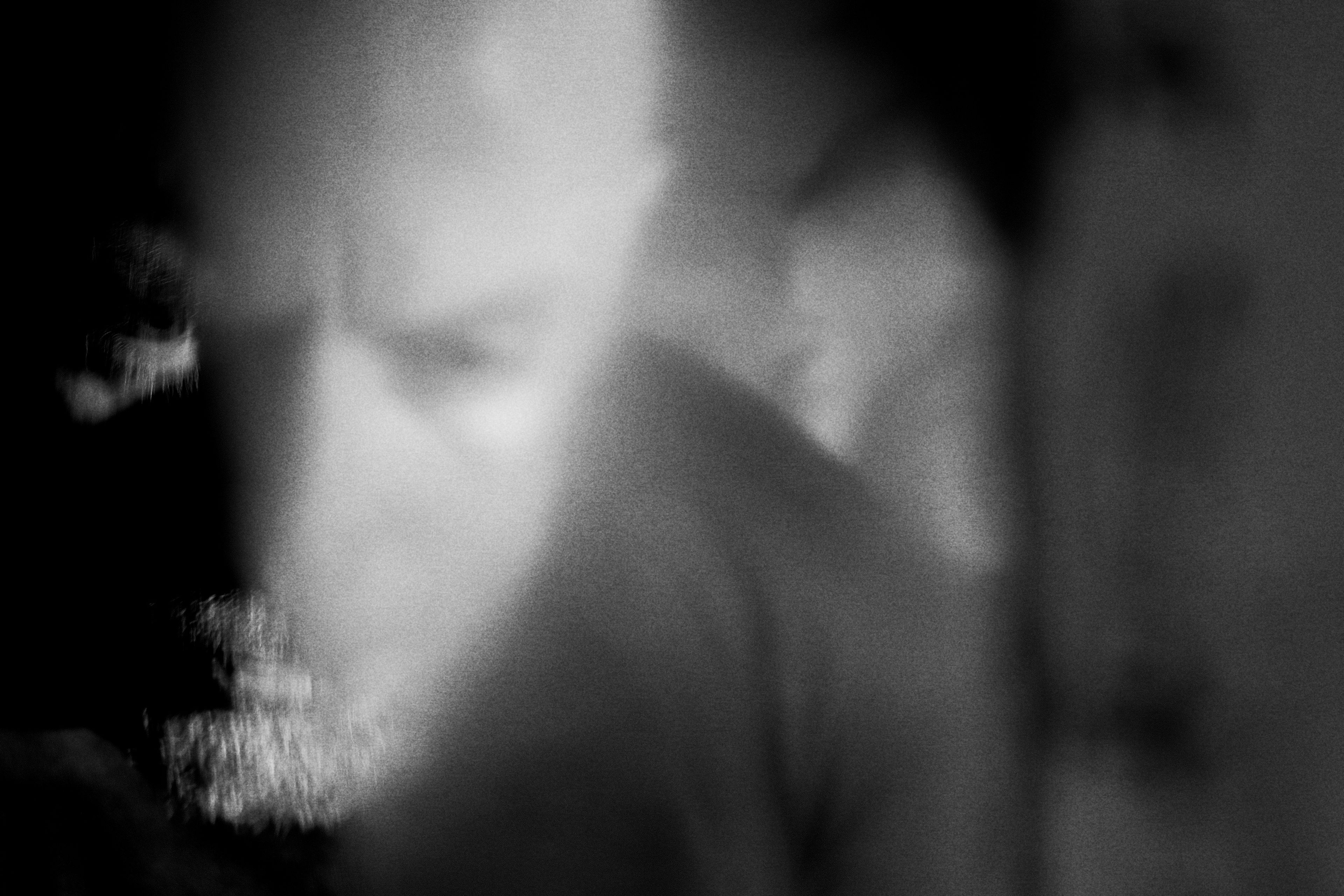
Back in 2014, my world fractured. My wife and I separated, beginning the difficult transition toward divorce. Our son was only two at the time—far too young to understand why his world was changing, but exactly old enough to be caught right in the middle of it. The stress of that transition took an immediate, heavy toll on my relationship with him.For the next two years, I was completely lost. I was trying to find a new direction and a sense of purpose, but it felt like wandering through a pitch-black tunnel with no guarantee of light at the end.That period of survival eventually inspired my creative project, Blurred. I want to clarify that the title doesn't mean the actual images are out of focus or poorly shot. Rather, "Blurred" describes the internal fog I lived through. It is an exploration of how I navigated a world that had become unrecognizable and hazy in the wake of my separation.
4. In Blurred, the boundaries between reality and dreams seem to dissolve. Why are you drawn to exploring this fragile space between consciousness and imagination?
Delving into the space between consciousness and dreams is important for me because it’s a vibrant, free-flowing state where the mind relaxes its strict boundaries. This "twilight zone" enables pure creativity to emerge, providing a direct link to the subconscious without the interruptions of everyday life.
5. The figures in Blurred often appear as fleeting traces of light and shadow rather than solid bodies. What does this visual transformation represent for you?
In visual art, turning solid objects into fleeting traces of light and shadow captures the fleeting nature of how we perceive things and the way memories fade. It hints that our identities and presence are more fluid than fixed, changing as we grow and learn. This visual approach serves as an emotional language, using contrast to strip away unnecessary details and focus on the core of a moment or feeling. Thus, reminding us that our physical forms are temporary, but the energy or spirit we leave behind is what truly lasts.
6. You work with both analog and digital photography. How do these two approaches contribute differently to the emotional atmosphere of your images?
Currently, I only use digital images. Even though I have a few film cameras, I find that digital photography allows me to express myself more easily. Since I travel frequently, carrying around a bag of film rolls would be pretty inconvenient!
Aside from the weight and logistics of carrying film, the ability to review images right away, back them up while on the go, and adapt to various lighting conditions without stressing over film stock or processing options is a huge plus.
I do have a small darkroom at home, which I mainly use for printing cyanotypes from digital negatives and experimenting with other alternative processes.
Creating prints from digital negatives gives me a lot of control over the final image while still keeping the tactile qualities of a handmade print. In a way, I’m separating the capture medium from the printing medium and choosing the best tools for each stage of the process.
7. Your work frequently explores the relationship between humans and nature. Do you see nature as a setting, a character, or perhaps a reflection of our inner states?
I would say nature in my photography work is frequently a reflection of my inner self but not always. Therefore, nature isn’t just one thing in my work; it’s a vibrant interplay of three roles.
It serves as the backdrop for human actions, a lively character with its own spirit, and a mirror that beautifully reflects the complexities of our human experience.
for example, in certain cases, nature sets the stage for our actions and gives my narratives a real foundation as in my Blurred body of work. On the other hand, in my series Lost Son I feel nature plays a totally different role closer to a reflection of my inner feelings. How we see a storm, a forest, or a dimly lit cave is usually influenced by our own emotions like sadness, grief, or search for clarity. By looking at nature this way, I encourage everyone to reflect on themselves while taking in the world around them.
8. Decadentia challenges conventional ideas about morality, pleasure, and the body. What motivated you to embark on such a provocative project?
I stumbled upon this project quite by accident! A friend of mine frequently visits adult content chat rooms, and he mentioned that there might be some fascinating photos to capture just from the preview adult chats. He was totally right! So, I began taking pictures of people who were willing to show themselves freely in these preview chats. In the end, I gathered over 500 snapshots, and some of those ended up being featured in the Decadentia series.
9. The project portrays individuals who reject society’s expectations and reveal their authentic selves. What have you learned about human vulnerability through this work?
Through my work on Decadentia, I discovered that human vulnerability is deeply paradoxical. Although we’re often taught to conceal our imperfections to escape judgment, intentionally shedding these false personas is crucial for building authentic relationships, liberating ourselves from restrictive social norms, and nurturing real emotional strength. Hiding your true desires to fit into strict social norms can lead to anxiety, inner conflict, and even more serious issues.
10. In Decadentia, pleasure often appears as a transformative force. How do you think pleasure shapes our understanding of identity and selfhood?
I believe that pleasure plays a significant role in shaping our identity by serving as an internal compass that guides us toward our true desires. Rather than seeking only fleeting satisfaction, taking the time to explore what genuinely brings you joy can uncover your core values and boundaries. This journey can be a powerful catalyst for self-discovery, motivation, and a deeper understanding of who you are.
For marginalized groups, embracing pleasure can be an essential source of strength and a powerful way to define oneself. By looking through a "pleasure-identity lens," we can see how personal desires and a sense of community support each other, helping to solidify an individual’s identity.
11. Some viewers may find certain images in Decadentia unsettling or controversial. How do you respond to strong reactions from audiences?
I have yet to receive strong reactions from audiences as far as the Decadentia project is concerned.
12. Your photographic projects often resemble visual diaries. How important is personal experience in shaping your narratives?
My personal experiences are the foundation of my photographic visual diaries. They keep me grounded in reality and present an authentic, self-reflective perspective that transforms the ordinary into a vibrant, personal story. In these visual diaries, my life experiences craft the narrative, making sure that each image captures the essence of a treasured memory or feeling.
By deeply engaging with personal viewpoints and life challenges, I’m able to create visual stories that resonate with many. It’s the sharing of authentic experiences that truly sparks empathy in these narratives.
13. Living between Italy and the United States, have your perspectives on identity, belonging, and cultural influences changed over time?
For me, living between Italy and the United States turned identity into a dynamic process rather than a fixed concept. Perspectives constantly shift, connecting American individualism with Italian relational culture. Over time, the sense of belonging shifted from simply fitting into one society to crafting a unique, blended cultural space.
Rather than picking just one culture, I've come to appreciate the unique qualities of both. For example, there are times when I embrace American efficiency in administration while also valuing the Italian emphasis on community and high-quality food.
14. In an age of fast-moving digital content, your work invites slow contemplation. What role do you think poetic photography plays in contemporary visual culture?
In our fast-paced digital age, where we’re constantly surrounded by a flood of content, poetic photography offers a delightful escape for the senses. Rather than just delivering information, it invites us to pause, reflect, and engage emotionally. This approach turns images into profound, contemplative experiences rather than simple records.
By focusing on suggestion rather than a clear-cut narrative, poetic photography creates a space for viewers to infuse their own memories and feelings into the experience, making it truly personal and unique.
In a world often dominated by heavy editing and AI-generated visuals, elements like soft focus or intentional grain can feel refreshingly genuine, emphasizing authentic emotional connections over rigid objective representation.
15. Throughout your career, your photographs seem to reflect an ongoing search for meaning and presence. What questions are you currently exploring in your artistic journey?
My photography journey is all about really enjoying the moment. Instead of trying to capture that perfect shot, I've turned my work into a mindful reflection on being present. I focus on how stillness, intention, and authentic observation can reveal the amazing stories hidden in our surroundings and the human experience. I feel this really sums up my place in my artistic journey.