
Painter and academic Deniz Kireç opens the doors to her expressionist world dominated by black, white, and gold. We spoke with Kireç, who defines art as a state of "flow," about her intuitive production process and the traces of symbolism.
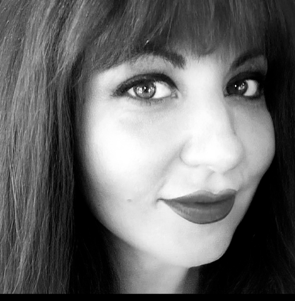
Deniz Kirec: “Art Is a Way of Expressing My Inner World”
1- Could you briefly introduce yourself?
Hello. My name is Deniz Kirec. I am an academic and a painter, and I live in Şişli, Istanbul. I completed my bachelor’s degree at Mimar Sinan University, my master’s degree at Parsons School of Design, and my PhD at Işık University.
2- How would you describe your artistic style?
My paintings have an expressionist and symbolist style. I mainly work with black, white, and gold.
3- Is art an escape for you or more of a form of expression?
Art is a form of expression for me. It is a space where I feel comfortable and where I can reflect my inner world.
4- Have you ever felt that a work of yours was never truly finished? Or what makes a work “complete”?
I have never really felt that a work was unfinished, but I have had pieces that felt lighter in spirit. That is why my second collection feels lighter.
For me, a completed work is something the artist feels when they look at it. There is no exact formula for it.
5- Was there anyone in your past who inspired you? A friend, teacher, or family member?
Many people, both older and younger than me, have inspired me throughout my life. I started painting in middle school, and I will never forget how my middle school teacher used to display every painting I made. My studio instructors and PhD professors were also very inspiring figures for me.
6- Do you prefer to be alone while creating your art?
Yes, I definitely prefer to be alone while creating my art.
7- Has any period in your life given you a new perspective on your art?
Certain turning points in my life have given me new perspectives in my artistic approach, especially when it comes to the use of color.
8- Has there been a film or book that influenced you recently? Did it affect your art?
Some of the books that have influenced me include Anna Karenina, Invisible Cities, and The Story of Art.
9- Have you ever had a turning point or an “Aha!” moment while creating art?
Honestly, I think the result is already part of the process. The “flow” state when you lose track of time and become deeply concentrated while creating is something that truly belongs to me. I have hyperactivity, so when I enjoy what I am doing, I can work for hours without stopping.
10- Do the colors, shapes, or techniques you use reflect personal impressions or emotions from your life?
Certain periods and experiences in my life have influenced my work, especially my use of color.
11- Have you ever said that you enjoy the process more than the result?
Yes. In fact, the result is the process itself. That feeling of “flow” losing track of time and being completely immersed in the work is a very powerful experience for me.
12- Does an inner voice guide you while creating your art?
Yes, intuition is always present in my work. My style is what we call intuitive or interactive painting. I do not plan or prepare sketches; my works take shape directly on the canvas.
13- What do you think people usually feel when they look at your art?
I think everyone finds a piece of themselves, their experiences, or even their traumas when they look at an artwork. One of my favorite moments was during an exhibition when a friend’s seven-year-old son looked at my paintings for a long time and made surprisingly intellectual interpretations.
14- Your three favorite types of music
Jazz, blues, and classical music. I was also part of the Boğaziçi Jazz Orchestra for a while.
15- Your three favorite books
Anna Karenina, Invisible Cities, and The Story of Art.
16- Your three favorite foods
Spaghetti, stuffed grape leaves (sarma), and sushi.
17- Your three favorite activities
Singing, painting, and dancing.
18- Your three favorite cities
Paris, Venice, and Çanakkale.
19- Is there money in art?
Art can also be an investment tool. About ten years ago there were more foreign investors. Later, with renovation projects supported by government incentives in certain areas of Istanbul, the art scene began to change and develop.
In my opinion, just like in any other field, if you are lucky and know how to make money, there is always money to be made. Earning money is one thing, but knowing how to invest it properly is just as important. It is something that can be learned.
There is money in art as well. However, it is important not to think small, to use high-quality materials, and to work with reputable names. Being selective is essential.
20- What advice would you give to people who are just starting out?
They should always remember that this is a journey and a process. They need to be patient, work with clear and realistic goals, and define what they truly want to achieve. Most importantly, they should not give up easily.