
The journey of Arsenal and Paris Saint-Germain to the pinnacle relies not merely on pitch tactics, but on radical cultural revolutions. Examining the footballing parallels of corporate theories by Jack Welch and Simon Sinek, this piece reminds modern leaders of the power of collective vision and "subtraction for growth."
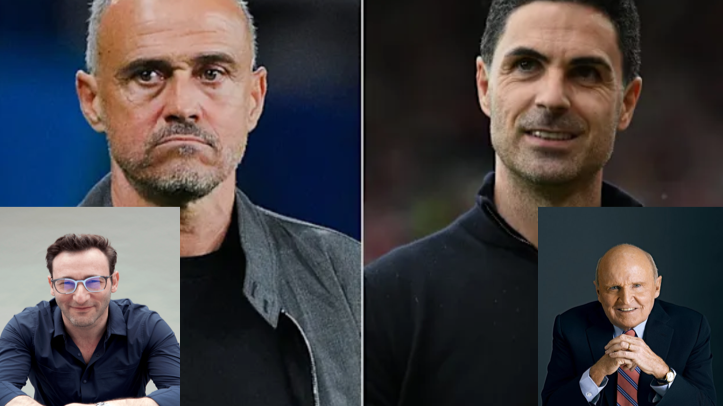
Culture Eats Ego for Breakfast: Lessons from Arsenal and PSG for the Business World
European football is offering a remarkable lesson in leadership. Recently, Arsenal and Paris Saint-Germain faced each other in the UEFA Champions League Final in Budapest.
These two clubs, which have dominated European football over the last two years and might well have met in last year’s final had they not been drawn against each other in the semi-finals, share a common secret.
Both teams arrived at this stage after undergoing a profound cultural transformation under their managers, Mikel Arteta and Luis Enrique.
Ironically, both coaches inherited squads filled with talent. Yet, shaped by the philosophy of La Masia, where Johan Cruyff established respect, humility, and team spirit as non-negotiable values, these Spanish managers made decisions that appeared financially and strategically risky at the time.
Today, they stand at the summit of European football.
But how?
What connects them not only to legendary managers such as Guardiola, Ferguson, and Klopp, but also to iconic CEO Jack Welch and leadership thinker Simon Sinek?
Corporate Toxicity and the High Talent, Low Trust Trap
Legendary CEO Jack Welch developed a famous framework for evaluating people. In his model, leaders are divided into four categories based on performance and values alignment.
The most dangerous group is what Welch called Type 4.
Individuals who deliver exceptional results but have little or no belief in the organization’s core values.
Welch’s advice was simple:
“Remove them immediately, because they poison the culture from within.”
Simon Sinek illustrates the same principle through the example of the U.S. Navy SEALs. In environments where trust and teamwork are matters of survival, a leader with average performance but strong values is always preferred over a brilliant performer who cannot be trusted.
Why?
Because the latter eventually destroys the organization.
This is precisely the lesson Mikel Arteta and Luis Enrique brought to the football pitch.
Radical Sacrifices: Growing by Letting Go
When Arteta arrived at Arsenal, losing had become normalized and the club’s superstars operated above the manager, the system, and in many ways, above the club itself.
Arteta embraced a principle often discussed in business: you sometimes have to shrink before you can grow.
He willingly accepted enormous short-term costs.
Mesut Özil, Arsenal’s highest-paid player and biggest global brand, was frozen out of the squad and ultimately released despite the financial burden involved.
Pierre-Emerick Aubameyang, the club captain, leading scorer, and fan favorite, lost both his place and his captaincy after repeated disciplinary issues before eventually leaving for Barcelona.
Nicolas Pépé, at the time Arsenal’s record signing, was moved on due to performance and adaptation problems. Arteta refused to fall into the classic corporate trap known as the Sunk Cost Fallacy, the belief that an expensive investment must continue simply because of the resources already spent.
In Paris, Luis Enrique performed a similar operation.
For years, PSG had revolved around superstar marketing power, shaped by figures such as Neymar and Kylian Mbappé. Enrique dismantled that culture.
He refused to indulge Mbappé’s demands during his move to Real Madrid and repeatedly demonstrated, through team selections and substitutions, that no individual would stand above the collective.
His message was unmistakable:
“No one is bigger than the badge.”
Rather than building around egos, he built around a system.
The Balance of Justice: Second Chances for Those Who Share the Values
Were Arteta and Enrique simply ruthless?
Not at all.
The most important component of this model is fairness.
The same system that removes a superstar who undermines the culture will fiercely support someone who remains committed to the values despite temporary struggles.
This corresponds to Jack Welch’s Type 2 leaders, individuals who fully embrace the culture but need support to improve performance.
Luis Enrique consistently backed Ousmane Dembélé. While his performances occasionally disappointed, his commitment, work ethic, and sense of belonging never wavered. Eventually, he became one of the cornerstones of the system.
Arsenal has perhaps an even stronger example.
Granit Xhaka.
In 2019, Arsenal supporters booed him off the pitch. He threw down his shirt, lost the captaincy, and appeared finished at the club.
Most people believed his story was over.
Arteta saw something different.
He trusted Xhaka’s professionalism, work ethic, and commitment to the team’s values. He gave him a second chance and helped rebuild both the player and the leader.
Xhaka rose from the ashes, became Arsenal’s on-field leader, and eventually left the club as a hero.
History Has Seen This Before
None of this is new.
Football history repeatedly shows how transformative cultural cleanups can be.
When Pep Guardiola took over Barcelona, one of his first decisions was to move on from Ronaldinho and Deco to protect a young Lionel Messi from negative influences.
Sir Alex Ferguson terminated Roy Keane’s contract after the legendary captain publicly criticized younger teammates on the club’s television channel.
Jürgen Klopp quickly abandoned record signing Christian Benteke when he did not fit the system, and sold Philippe Coutinho without hesitation when the player pushed for a move away. The funds from that transfer helped bring in Virgil van Dijk and Alisson Becker.
Once again, growth came through subtraction.
What Are Arteta and Enrique Teaching Leaders?
Both managers chose the hardest path.
Organizations constantly face the temptation to protect talented individuals who violate their values because of short-term pressure, financial targets, or public expectations.
Yet this is often where decline begins.
The cost is not only financial.
Toxicity carries a cost.
Injustice carries a cost.
The moment special treatment is granted to someone simply because they are talented, famous, or profitable, the loyalty of the quiet, committed people who keep the organization running begins to erode.
The Hidden Hero: The Boardroom
The most important actor in this story is often invisible.
The board.
Behind leaders such as Arteta and Enrique, and behind legends like Guardiola, Ferguson, and Klopp, stood boards willing to prioritize long-term culture over short-term financial performance.
Boards that believed in trust, shared values, and organizational integrity.
When that support exists, when leaders are trusted to let go in order to grow, when Welch’s Type 4 individuals are removed, when values are placed above short-term performance, and when Type 2 individuals are nurtured, extraordinary things become possible.
Organizations become resilient.
They become exceptional.
And eventually, they reach their own Champions League final.
Perhaps the secret of lasting success has been in front of us all along.
What do you think?
Kaan Tuncbilek,