
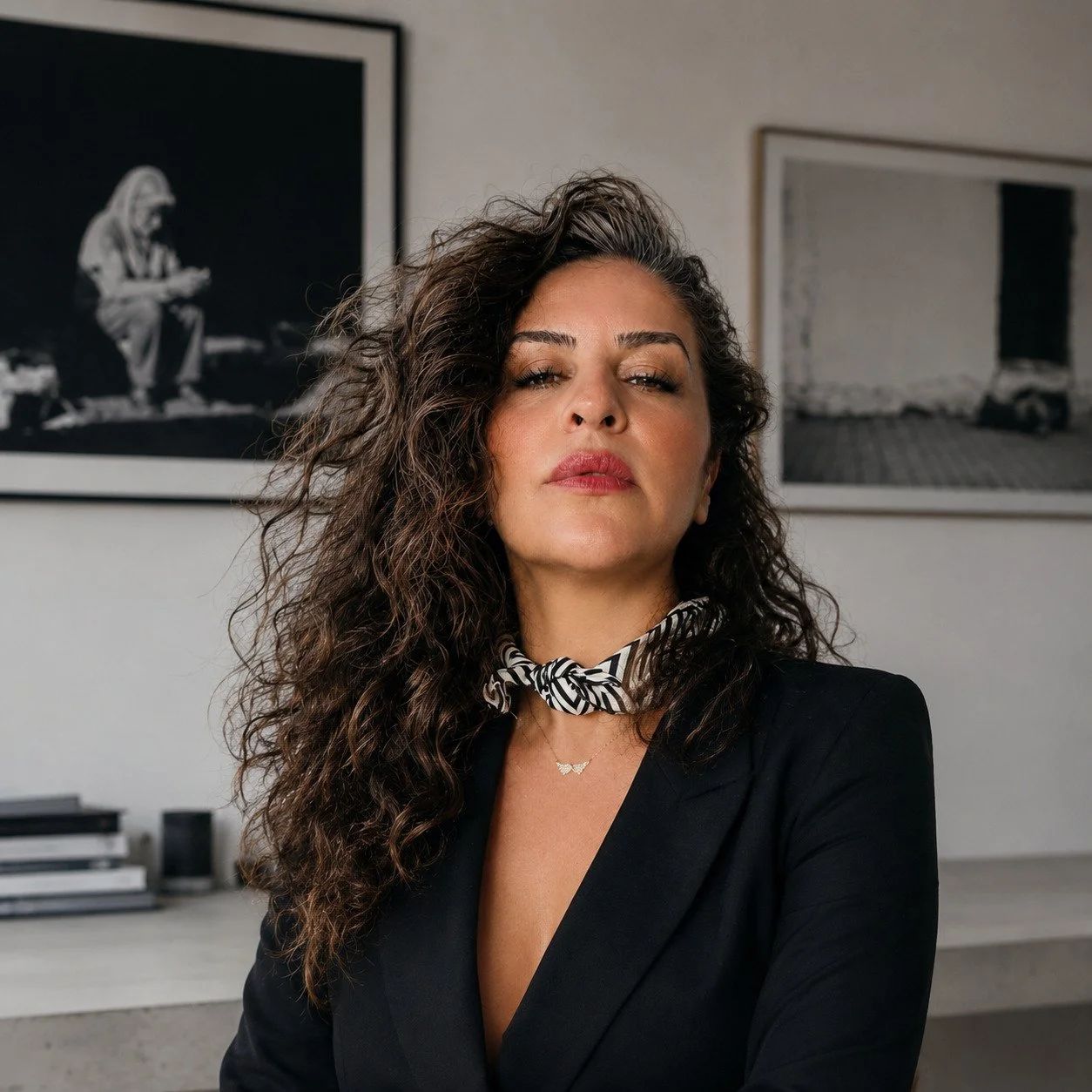
Gunes Kaplan is a photographer and visual artist whose interdisciplinary
practice is informed by her background in sociology. Working across
photography, painting, and material-based practices, she explores the
relationships between people, place, memory, and lived experience.
Drawing from documentary observation while embracing a poetic and
intuitive visual language, Kaplan investigates how landscapes, architecture,
and everyday environments become carriers of personal and collective
histories. Rather than documenting places as they appear, she examines
the emotional, social, and psychological layers embedded within them,
revealing the subtle traces that shape our relationship with place, identity,
and belonging.
Moving between observation and interpretation, Kaplan constructs layered
visual narratives through photography, painting, and material exploration.
Her practice reflects on memory, transformation, resilience, and the
evolving nature of human experience, inviting viewers to engage with the
quiet stories held within places, objects, and everyday encounters.
Kaplan holds a BA in Sociology from Anadolu University and has
completed professional training in photography and decorative wood
ornamentation. Her works have been exhibited in national and
international exhibitions and independent art platforms. She is a member
of the Royal Photographic Society (RPS), United Kingdom, and ANFOK
(Antalya Photography Club).
ARTIST STATEMENT
My practice explores the relationship between people, place, memory, and
lived experience through photography. Rather than approaching photography
solely as a documentary medium, I use it to investigate the emotional, social,
and psychological layers embedded within landscapes, architecture, and
everyday environments.
Observation is at the core of my practice. I am drawn to quiet moments,
overlooked details, and the subtle traces left by human presence. Through
these encounters, I explore how places become carriers of personal and
collective memory, where history, identity, and belonging intersect.
Working between photography, painting, and material-based processes, I
construct visual narratives that move beyond documentation. My images are
shaped by both observation and interpretation, allowing space for ambiguity,
contemplation, and multiple readings. I am interested in how ordinary
moments can evoke universal experiences and how visual language can
communicate what often remains unspoken.
Rather than offering fixed meanings, my work invites viewers to slow down,
observe, and engage with the quiet dialogues that exist between people,
places, objects, and memory.